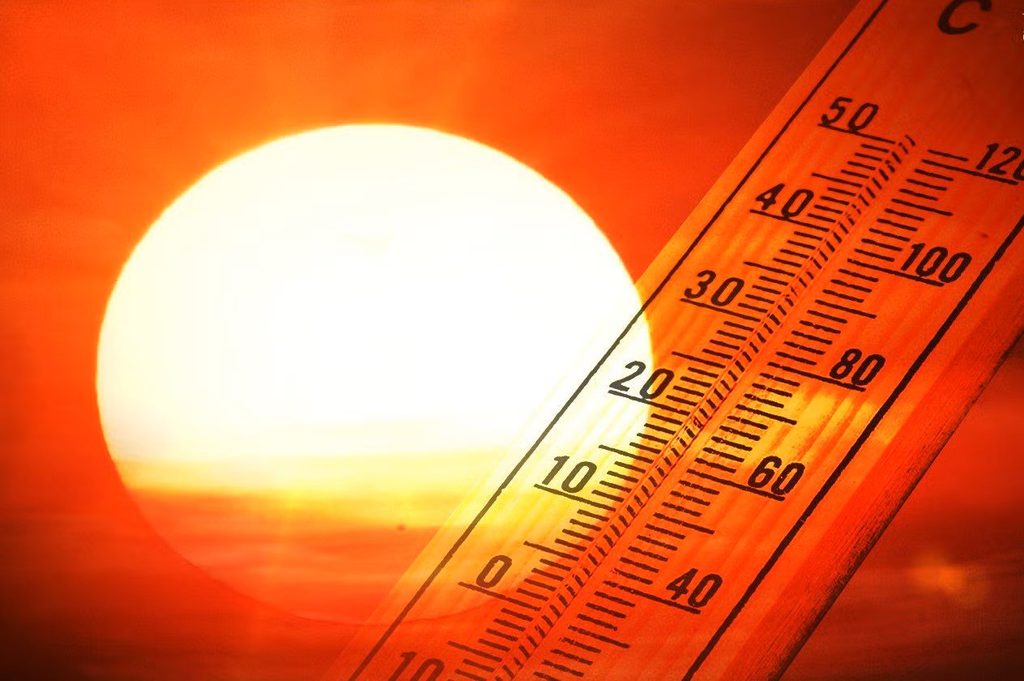
“Oh, and I have today’s forecast … HOT!” ~ Mister Señor Love Daddy
Can we get a damn nor’easter up in this joint??
We NEED relief!!
Summers in New Jersey have been getting more horrific each year, however, v.2026 has outdone itself. I do not think I have stopped perspiring since May 31st.
It is time to examine some oldies but goodies, regarding the oppression the solstice has served up thus far:
London’s Great Stink of 1858
This summer heat wave has lived in infamy not only for its soaring temperatures but also for the malodorous stench it unleashed on England’s capital. Many Londoners had recently traded in their chamber pots for water closets, which flushed an unprecedented amount of water and waste into the city’s 200,000 cesspits.
As sewage overflowed into the River Thames and its tributaries, the warm weather encouraged the growth of bacteria with an odor so noxious that sheets soaked in chloride of lime were hung from the windows of the newly built House of Commons in an effort to blunt the smell. London’s poor still drank from the Thames, and thousands died that summer from cholera, typhoid and other diseases; these epidemics had yet to be linked to contaminated water and were instead blamed on the reeking air.
Amid public outcry, Parliament resolved to overhaul the city’s antiquated sewer system, enlisting the help of Joseph William Bazalgette, a brilliant and celebrated civil engineer. His sprawling network of drains and pumping stations, designed to handle 420 million gallons of liquid waste a day, officially opened in 1865 and became fully operational a decade later. Many credit Bazalgette with saving thousands of lives – and, of course, sparing countless noses from London’s intolerable stink.
The Great New York Heat Wave of 1896
At the end of the 19th century, New York City was home to some 3 million people, many occupying the notoriously cramped and stifling tenements of the Lower East Side and other low-income neighborhoods. When 10 days of relentless heat baked the Big Apple in August 1896, these abysmal living conditions went from an uncomfortable reality to a death sentence for an estimated 1,300 New Yorkers. Roasting in their jam-packed bedrooms and barred from sleeping in public parks by a citywide ban, many tenement dwellers sought a breath of fresh air on rooftops, fire escapes and piers. A sizable share of the heat wave casualties occurred when people fell asleep, rolled from their perches and plummeted to their deaths; others succumbed to heat stroke and other heat-related ailments. More than 1,000 horses also died during the crisis.
Even as the death toll mounted, the city government did little to address the disaster, and the heat wave was on the verge of waning by the time the mayor called an emergency meeting. One relatively obscure official emerged as a hero: Theodore Roosevelt, the city’s police commissioner, who had angered New Yorkers earlier in the summer by cracking down on taverns that stayed open beyond the legal closing time. The future president instructed the police force to distribute free ice in tenement neighborhoods and provide ambulance services to the sick. According to some historians, the heat wave salvaged Roosevelt’s faltering political career and ultimately helped propel him to the White House.
The Chicago Heat Wave of 1995
Like much of the central and eastern United States, Chicago had suffered through the devastating heat waves of 1980 and 1988, which persisted for weeks and caused tens of thousands of fatalities nationwide. But in the summer of 1995, the Windy City lost approximately 700 residents in just five humid and sweltering days – a staggering mortality rate that exposed the city’s inadequate response system while debunking common assumptions about which groups are most susceptible to heat-related death.
On July 13, the temperature in the city hit 106 degrees and the heat index, which takes humidity into account to gauge how hot it actually feels, surpassed 120 degrees. As the heat lingered, much of Chicago’s urban infrastructure began to break down: excessive air conditioner use maxed out the power grid; relief seekers opened so many hydrants that several communities lost water pressure; and train rails and roads buckled, causing massive commuter delays.
Paramedics, hospitals and morgues were quickly overwhelmed, and midway through the heat wave there was a backlog of hundreds of bodies. In the aftermath of the tragedy, researchers found that most of those who died were older men who lived alone, despite the fact that senior women outnumbered senior men in the area; they concluded that women’s stronger social connections to the community had acted as a defense. Four years later, when another heat wave hit the city, better preparation and a more rapid response limited the deaths to just over 100.
So, let us hope the echoes of Truman Capote — (“The humidity was so high you could slice it with a knife and spread it on bread.”) — are soon silenced, as we sip a steaming mug of a liquid sufficiently spiced with pumpkin, apple, maple cinnamon, or dark peppermint.
Did You Know? When the air has a high moisture content, as is the case in humid weather, sweat cannot evaporate, leaving our bodies feeling hot and sticky. To cool off, our bodies must work even harder. This results in excessive sweating, increased rate and depth of blood circulation, and increased respiration. This can cause a loss of water and chemicals the body needs in order to function properly, potentially putting our health in jeopardy. Because humidity stops sweat from drying on your skin, the body heat can cause severe dehydration, muscle cramps, extreme fatigue, and fatal heat stroke. It also helps mold and dust mites grow, triggering bad asthma, as well as itchy rashes and makes eczema worse.
Again I found the history of heat waves so interesting—- thank you -I especially liked hearing about Teddy Roosevelt one of my historical heroes ——-I hope the worse part of the summer is behind us—I also believe when you have a wet summer I read the FALL colors are beautiful –and pumpkin spice Lattes are my favorite——-and your Blogs have helped me every week Thanks again !!!!!!!