My father, a man of very few words, is here. The forlorn look on his face is not new and it denotes nothing of the life he has lived. If you were to ask him, it is a look like any other look and should not be interpreted otherwise. This is the extent of his explanation, “that is that.”
However, I imagine that he is gazing into the past, recollecting the days of his innocent childhood. I consider that he is hearing the voice of my grandmother offering him advice or scolding him. I determine he is remembering my grandfather or my uncle.
I think he must be remembering his childhood newspaper route or his first job on the mainland, (Puerto Rico, afterall, is a U.S. territory).
Down, down, down the lane of memories, I settle on Carmen, my mother. Now, this spurs a conversation followed by laughter. He recounts my mother teaching him to cook and assures me he has perfected rice. He tells me that he is tending to her brightly colored flowers in front of the house.
My father sits by the window and recounts inside jokes he and my mom had. He complains about the pain in his leg and his hip and assures me it is all because he fell while changing a curtain for my mother. He tells me, “I don’t know what got into her on this day; she wanted me to change the curtain in our bedroom.” He explains, “I put my foot on the edge of the bedframe, slipped, and fell on my hip.”
I am convinced there is more to the story, “that is that.”
My father tells me that he only now understands some of the limitations my mother experienced in her later years, he is now having them too. However, he is committed to movement, so he treks off on his daily walk to the park, altogether one mile. Each morning, he asks me to take note of the time of his departure and upon his return he proudly states, “42 minutes.” He boasts, “tomorrow I’ll make it even better.”
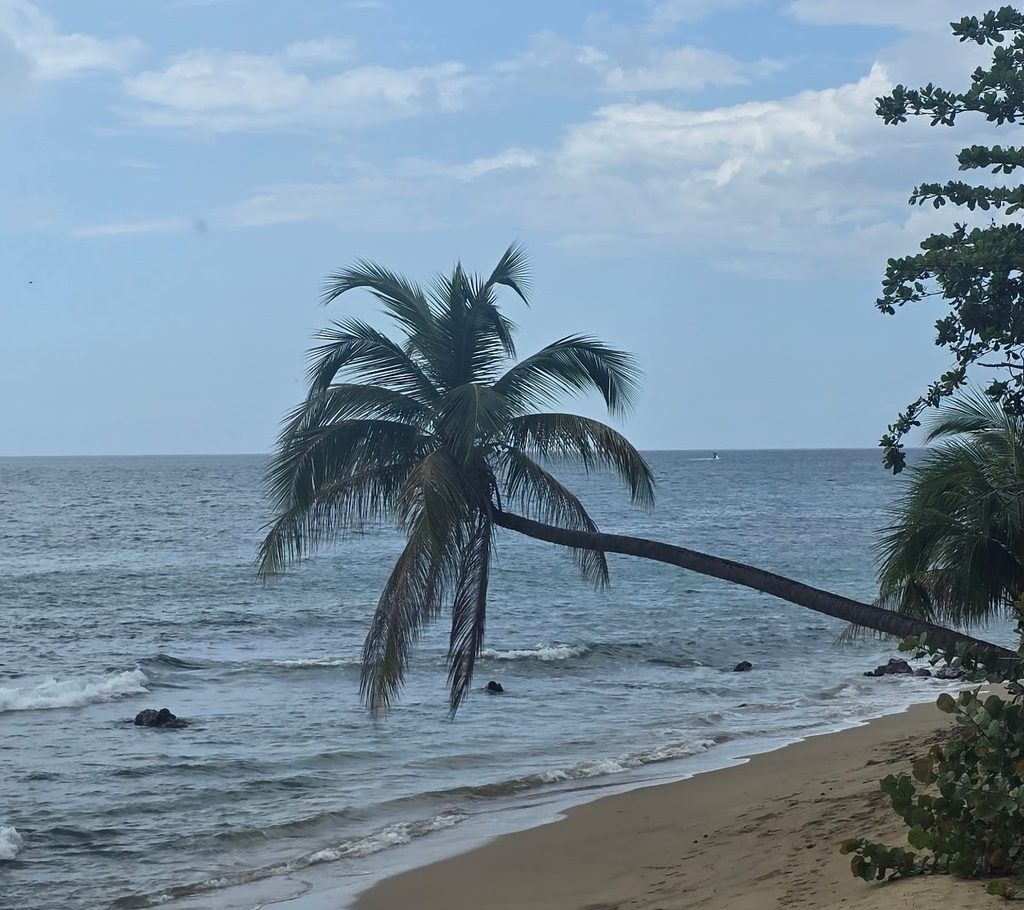
My father cracked open a little on this day and said, “I miss her.” I looked at him and said, “I miss her too.” This was quickly followed by, “you can drive me to the beach tomorrow.” I agreed.
On the drive to the beach, my father laughed as he recalled my mother complaining about my driving. He accurately recalled her promises not to go on the next trip if I drove. “Crazy,” that is what she called him when he handed me the keys!
As my father and I walked through Keansburg, (N.J.), we searched for the place we used to eat. We shared a beer and some laughs there. We waited for the pizzeria across the way to open and had two slices.
I spoke to the young server and explained why my father and I waited twenty minutes for them to open and insisted on eating there. He confessed the recipe had changed, and the establishment was just sold two months ago. He asked what I thought of the pizza and I said, “very good.” He shook my hand and my father’s too. I like to think my mother was there with us.
Initially, I felt anxious about my father’s visit. The loss of my mother is ever present. I felt scared that the buffer between my father and I was no longer with us. I don’t feel anxious anymore. I understand.
Did You Know? Daughters with low cortisol levels, linked to weak father relationships, often describe their relationships with men negatively. A strong father-daughter bond can affect a daughter’s life as an adult. A father sets the standard for treatment and expectations in future relationships. The Institute for Family Studies notes that daughters with strong father connections are less likely to experience teen pregnancy or early sexual activity. In college, they are more likely to seek emotional support from partners and less likely to be coerced into risky behavior. A solid bond can lead to healthier views on dating, resulting in more satisfying, long-lasting partnerships.
THANK YOU for sharing your recent time with your dad—–I know all the future times you share will bring new insights and warm memories for both of you — ——I had a very close relationship with my dad who died 32 years ago —- He was the only son of immigrant parents—- —HE believed treating ALL PEOPLE men and woman EQUALLY ==== no matter ANY kind of differences – ——- because of him sharing and living those beliefs –I KNOW—I have been so BLESSED with lasting friendships of unique -different and special —–men and women ——– for which i am so grateful ————-glad to read a piece from you